Ground-Level Truths.
Unseen Value Chains.
Fieldwork by Farzana Reza Shifa on informal micro-economies across Bangladesh. Investigating how nomadic producers, rural artisans, and independent entrepreneurs survive market asymmetries, seasonal shocks, and middleman capture.
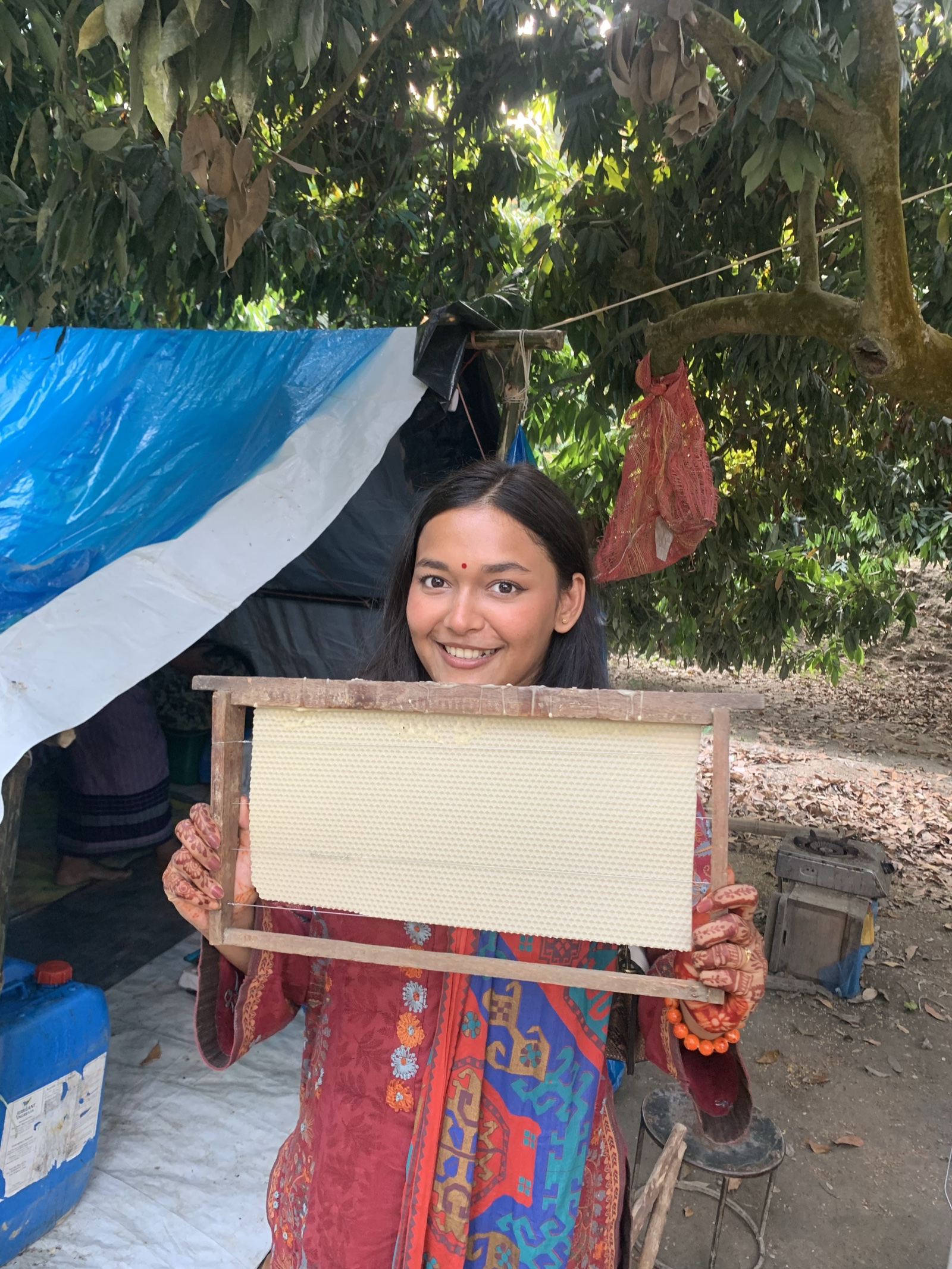
Litchi orchard field apiary, Panchagarh, North Bengal
Lichur Modhu: The Migratory Beekeepers of Panchagarh.
Every spring, when hundreds of acres of commercial litchi orchards across Panchagarh burst into flower, an informal army of nomadic apiarists arrives with truckloads of beehive boxes. This is the unheralded micro-economy of unifloral litchi honey (*লিচুর মধু*).
The Ecological & Agrarian Symbiosis
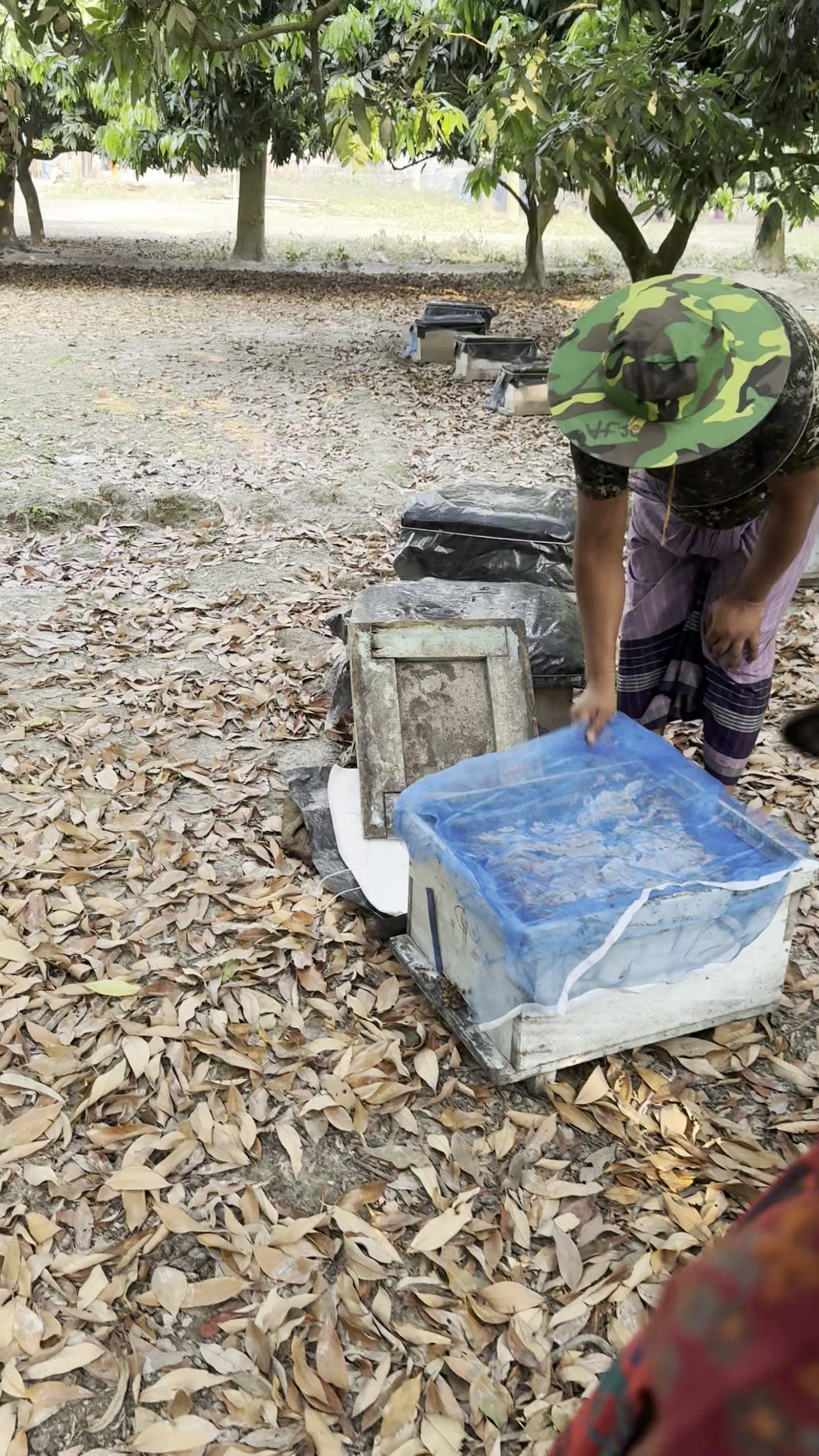
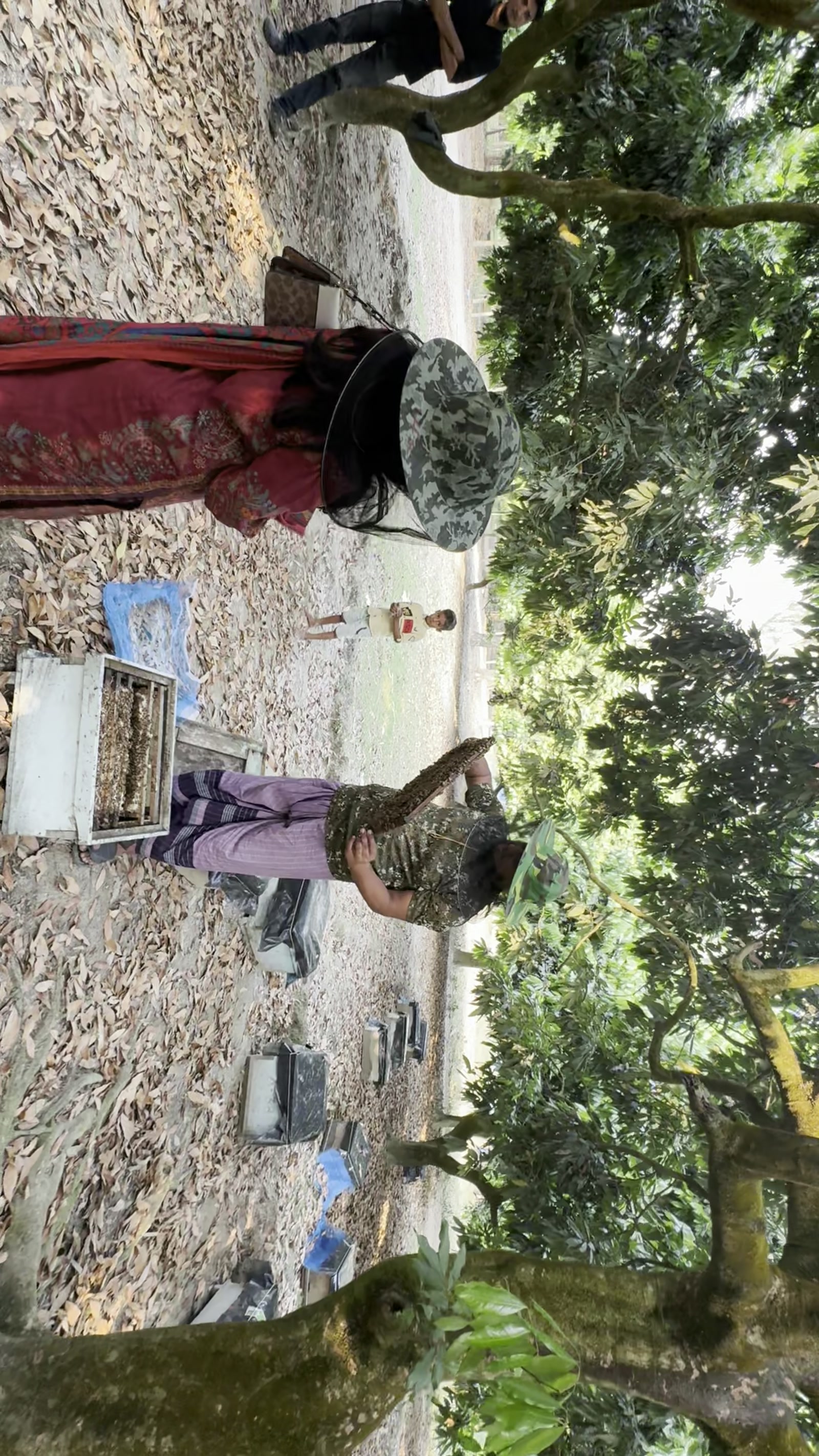
Orchard leasers and beekeepers operate an informal barter pact. The beekeepers place dozens of multi-tier wooden apiary boxes directly under the shady litchi canopy. While worker bees gather sweet nectar from the pale blossoms, their pollination activity boosts fruit set by 20% to 30%. Neither party charges the other a monetary fee—an unspoken, zero-cash agro-ecological alliance.
The Hyper-Compressed Harvest Window
Unlike mustard honey (*Shorishar Modhu*) which blooms across winter, litchi flowers last barely three weeks. A single prolonged hailstorm or sudden heat wave can scorch the blossoms overnight. Beekeepers work around the clock, uncapping honeycomb frames with hot knives and spinning them in centrifugal extractors inside makeshift field tents.
Middleman Monopsony & Distress Selling
Because beekeepers must quickly migrate their colonies to Sundarbans or Dinajpur once the bloom ends, they cannot afford heavy drum storage or long-term logistics. Intermediaries from metropolitan processing brands capitalize on this urgency, buying raw honey in 40kg plastic barrels at distressed prices (৳250–৳350/kg), capturing the vast majority of consumer surplus.
The “A Solid Modhu” Micro-Retail Model
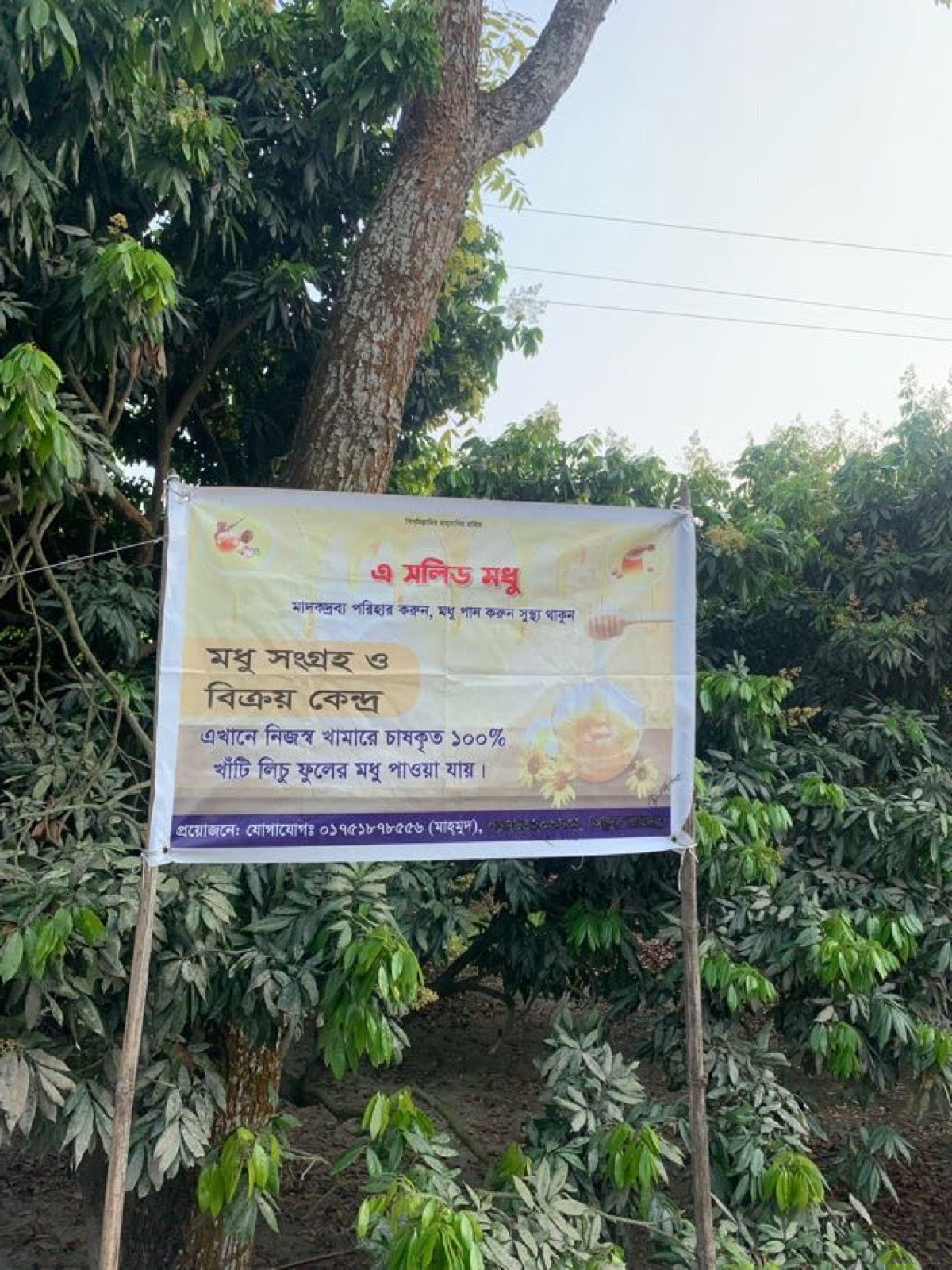
In response to predatory middlemen, local beekeepers like Mahmud have begun piloting on-orchard retail stalls—putting up banners stating “Own farm 100% pure litchi honey” (এ সলিড মধু). By retailing directly to highway travelers and regional buyers at ৳600/kg, they double their margins while educating consumers on the natural crystallizing properties of raw litchi honey.
“When raw litchi honey crystallizes into a smooth, creamy texture in winter, urban buyers panic and accuse farmers of adding sugar. That single consumer misunderstanding gives corporate aggregators the excuse to over-heat and pasteurize honey—destroying the very enzymes people pay for.”
On-Ground Apiary Inspection · Panchagarh
Direct participatory observation inside the litchi orchard: inspecting active hive frames, uncapping worker comb, and documenting colony health under the canopy.
Documenting the Colony & the Blossom.
Photographic documentation from the orchard floor, capturing beekeeping infrastructure, local signage, and worker bee colony health.
Field Studies & Informal Economies.
A living collection of applied economic and sociological fieldwork. More studies and datasets will be published here as field expeditions conclude.
Lichur Modhu: Migratory Apiaries
Investigating the seasonal micro-economics, wholesale margins, and value chain capture of unifloral litchi honey in Panchagarh, North Bengal.
Terracotta Craft & Potter Settlements
First-hand venture ethnography: Direct sourcing from pal para artisans, zero-breakage packaging logistics, and generating ৳2.5L to self-fund university studies.
Women’s Financial Inclusion & Micro-Retail
Documenting how female micro-entrepreneurs navigate microfinance repayment schedules, emergency liquidity, and household bargaining power.